5 Common Lockout Errors That Turn a Simple Fix Into an Expensive Repair
Experiencing a home, business, or vehicle lockout is inherently stressful, but panicked DIY attempts almost always turn a quick, non-destructive service call into an expensive hardware replacement job. When a key binding occurs or a lock cylinder freezes, understanding what not to do is just as important as knowing who to call. Avoid these five critical mistakes when dealing with a stubborn or jammed lock mechanism.
Error 1: Flooding Jammed Cylinders with WD-40
WD-40 is a water dispersant, not a precision lock lubricant. Spraying standard WD-40 into a sticky keyway provides immediate short-term movement, but leaves behind a sticky solvent residue inside the cylinder housing.
┌────────────────────────────────────────────────────────────────────────┐
│                   THE WD-40 CONTAMINATION CYCLE                        │
├────────────────────────────────────────────────────────────────────────┤
│  1. WD-40 sprayed into keyway  ► Dissolves factory grease temporarily   │
│  2. Solvent evaporates         ► Leaves sticky petroleum film behind   │
│  3. Dust/grit attracts to film ► Forms dense abrasive sludge paste     │
│  4. Pin springs seize permanently ► Complete mechanical cylinder lockup │
└────────────────────────────────────────────────────────────────────────┘
- The Technical Risk: Over a period of days, this film attracts airborne dust, pocket lint, and metallic grit, forming a dense sludge paste. This paste prevents the delicate internal spring stacks from pushing pin tumblers back to their home positions, permanently seizing the lock.
- The Correct Alternative: Use a dedicated dry graphite lubricant or specialized PTFE aerosol spray (e.g., Tri-Flow or Houdini) engineered specifically for high-precision pin-tumbler lock cylinders.
Error 2: Forcing a Sticking Key with Pliers or Excessive Torque
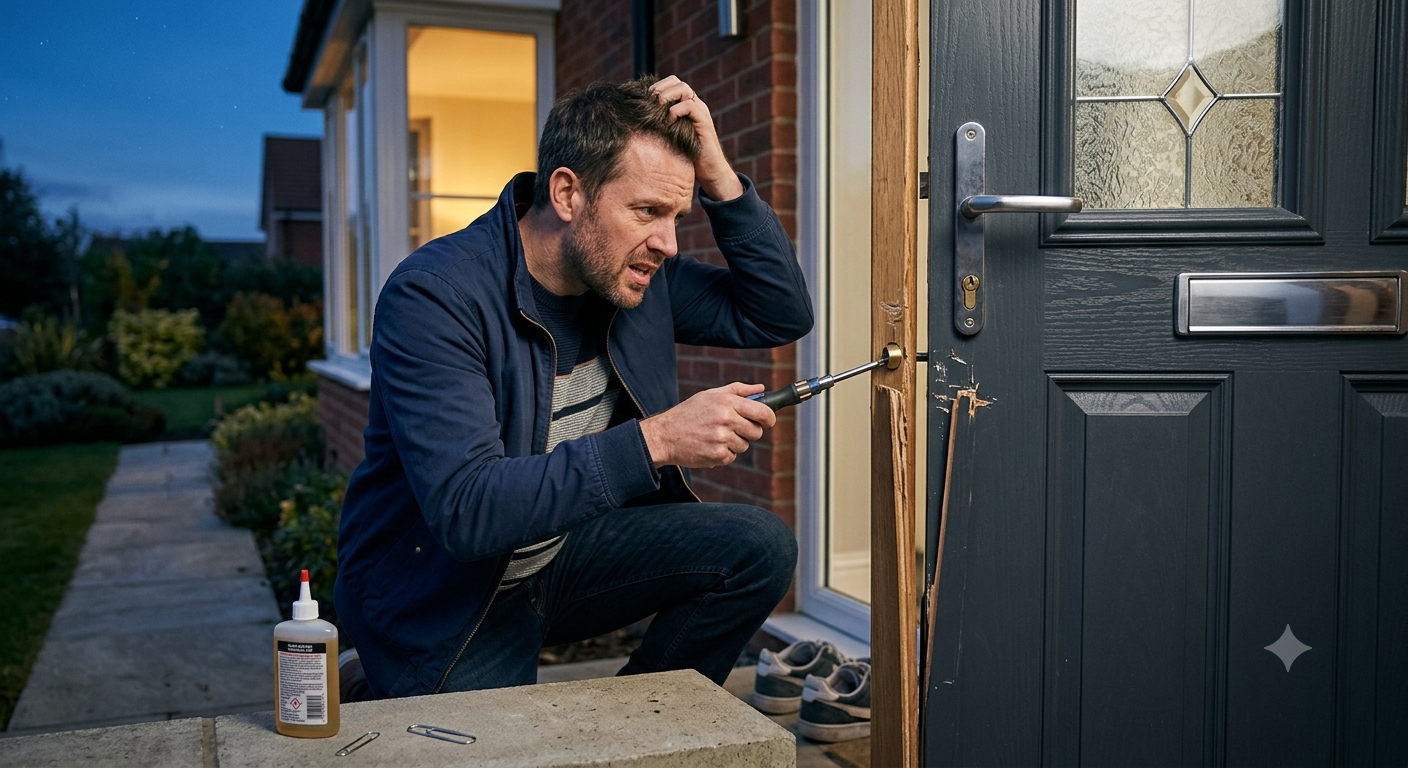
When a key resists turning in the lock barrel, applying extra leverage with pliers, channel locks, or heavy thumb force is a guaranteed way to snap the metal blade.
- The Technical Risk: Modern keys are made of brass or nickel-silver alloys designed to wear down before damaging the lock cylinder’s internal pins. Applying excessive rotational force shears the key blade right at the bow or midway down the cut cuts.
- The Result: A hardened metal fragment remains wedged deep inside the keyway across the shear line. Extracting broken fragments requires specialized key extractor tools, and if the broken key fragment has severely gouged the plug walls, the entire cylinder must be drilled out and replaced.
Error 3: Attempting DIY Lock-Picking with Improvised Tools
Hairpins, paperclips, and cheap lock picks purchased online lack the exact physical tolerances required to lift binding pins without damaging internal lock components.
                  SHEAR LINE ALIGNMENT (Normal vs. Damaged)

     [ Upper Pin ]                 [ Upper Pin ]
  ───┼───────────┼─── Shear Line  ───┼─────▒─────┼─── Damaged Shear Line
     [ Lower Pin ]                 [ Lower Pin ]    (Gouged chamber binds pins)
  ───┴───────────┴───             ───┴───────────┴───
       NORMAL PIN                       DAMAGED CHAMBER
- The Technical Risk: Improvised tools made of soft steel easily scratch pin chambers, deform delicate brass springs, and score the cylinder plug. Furthermore, flimsy tool tips frequently snap off inside the keyway.
- The Result: A damaged pin chamber prevents even the original key from working once set, forcing a destructive drill-out rather than a quick, clean picking operation by a professional locksmith.
Error 4: Prying Doors or Window Frames with Screwdrivers
Attempting to bypass a jammed latch bolt by prying open door frames, forcing window sashes with screwdrivers, or shoving plastic cards into high-security deadlatches causes severe structural damage.
- The Technical Risk: Modern commercial and residential exterior doors feature anti-shim deadlatches—secondary plunger pins that freeze the main latch bolt in place when extended. Forcing a card or pry tool against a deadlatch will not retract the bolt.
- The Result: Prying splits wooden door jambs, bends metal strikes, deforms aluminum window frames, and ruins weather stripping. Structural frame repairs frequently exceed $500–$1,000, far outstripping the cost of hiring a licensed locksmith to perform a clean bypass.
Error 5: Hiring Unvetted, Unlicensed Locksmith Services
In high-stress lockout situations, consumers often click on top-sponsored search ads offering unrealistic “$15 or $29 service call fees.”
| Red Flag / Scam Indicator | Professional Locksmith Standard |
| Unrealistic bait pricing ($15–$29 fixed) | Transparent, itemized field pricing estimates upfront |
| Arrives in an unmarked personal vehicle | Arrives in a fully equipped, branded service van |
| Immediately claims lock must be drilled out | Employs non-destructive picking / decoding techniques first |
| Demands cash-only payment upon job completion | Accepts multiple payment methods with formal digital invoices |
- The Risk: Unlicensed operators arrive on-site, immediately claim the lock is “high-security” and impossible to pick, unnecessarily drill out functioning hardware, and demand inflated final invoices totaling hundreds of dollars.
- What to do instead: Always partner with an established, local locksmith service with verifiable business address listings, transparent pricing models, fully marked service vehicles, and documented reviews.