
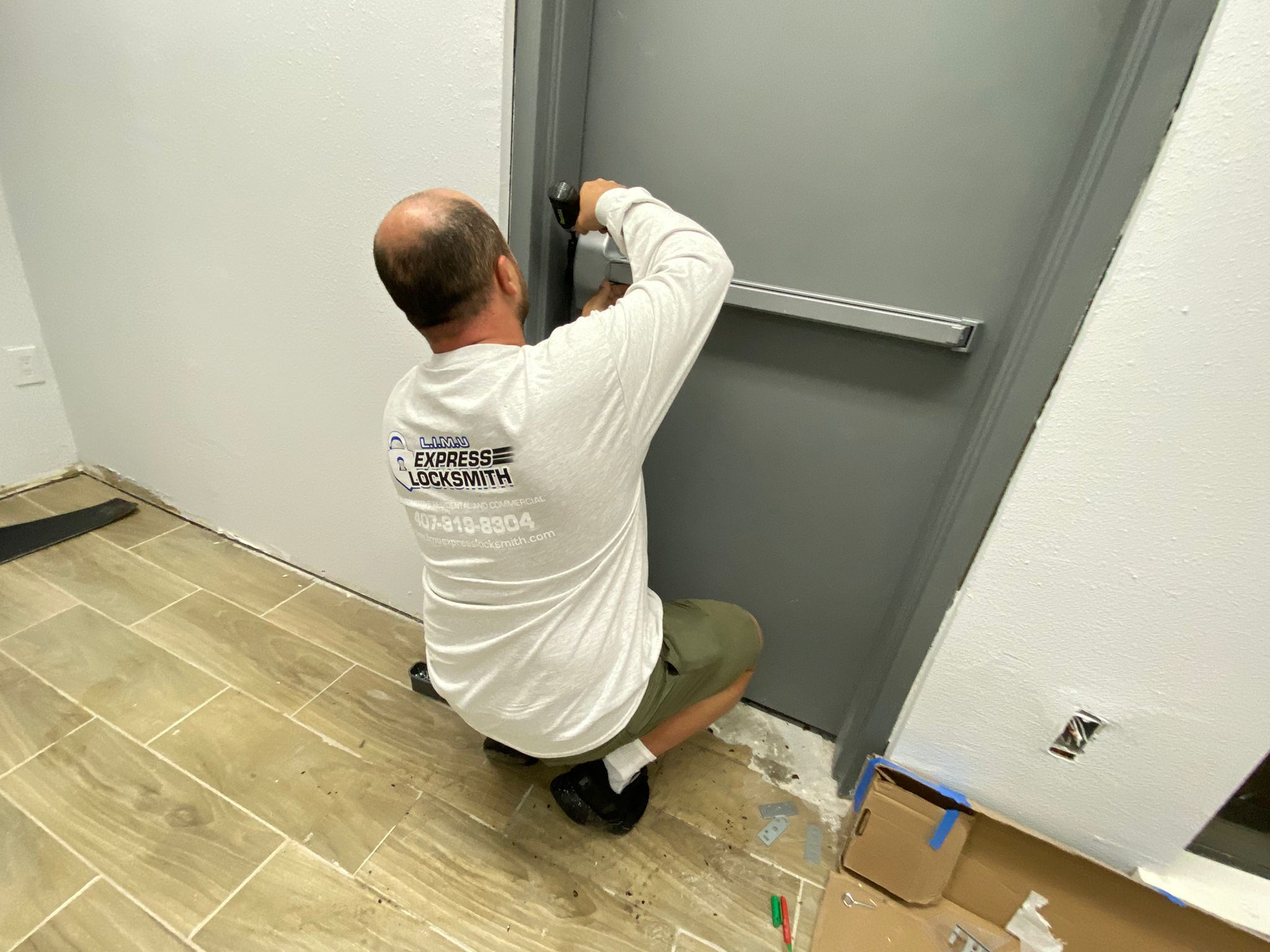
What is a Panic Bar (Push Bar)? Fire Code Compliance and Maintenance for Commercial Doors
Exit doors in commercial properties are strictly regulated by building and life safety codes. Among the most critical hardware installed on these entryways is the panic bar (also known as a push bar or exit device).
Whether you manage an office building, retail store, school, or restaurant in Central Florida, understanding how panic hardware operates and ensuring it meets life safety requirements is essential for protecting your occupants and avoiding costly municipal fines.
What is a Panic Bar and How Does It Work?
A panic bar is a spring-loaded metal bar fixed horizontally to the inside of an exit door. Pressing the bar mechanism unlatches the door instantly, allowing immediate egress without requiring the user to turn a knob, flip a lever, or unlock a deadbolt.
Life Safety Codes: Why Panic Hardware is Mandatory
The National Fire Protection Association (NFPA 101 Life Safety Code) and the International Building Code (IBC) enforce strict standards regarding exit hardware on public and commercial properties.
| Compliance Area | Code Standard Requirement | Impact of Non-Compliance |
|---|---|---|
| Single-Motion Egress | Door must open outward with a single pushing motion | Failed fire inspections, severe liability in emergencies |
| Occupant Load Threshold | Mandatory for assembly or educational spaces with 50+ occupants | Immediate shutdown or failure of Certificate of Occupancy |
| No Secondary Locks | No extra padlocks, deadbolts, or chains allowed while occupied | Heavy municipal fines and compromised emergency exits |
Common Types of Exit Devices
Choosing the correct exit hardware depends on your door frame, glass inserts, and security requirements:
| Exit Device Type | Description | Best Suited For |
|---|---|---|
| Rim Panic Bar | Surface-mounted latch on the inside of single doors | Standard solid metal or wood emergency doors |
| Vertical Rod Exit Device | Latches at both top and bottom of the door frame | Double doors without a center mullion post |
| Mortise Exit Device | Locks deep inside the door cavity for maximum physical strength | High-security commercial buildings and warehouses |
| Alarmed Exit Device | Sounds an audible alarm when pushed to prevent theft | Retail emergency exits to deter shoplifting |
Key Signs Your Panic Bar Needs Maintenance
Continuous heavy use can cause mechanical wear in push bar hardware. Have your emergency hardware inspected if you notice:
- Sticking or Stiff Bar: The push pad fails to return smoothly to its starting position.
- Latch Misalignment: The door latch fails to catch in the strike plate, leaving the door unlocked or unlatched.
- Loose Hardware: Screws or mounting pins have loosened from the door body due to daily slamming.
Professional Push Bar Services in Central Florida
Keeping your emergency exit doors fully operational keeps your employees safe and your business compliant with local code inspections.
At Limu Express Locksmith, we install, repair, and retrofit commercial panic bars in Orlando, Winter Park, and Altamonte Springs. Contact our licensed commercial team to schedule a hardware inspection or emergency repair.