
Rekeying vs. Replacing Locks: How to Upgrade Security After Moving or Tenant Turnover
When taking ownership of a new home, commercial space, or apartment complex, securing the property’s physical perimeter is a non-negotiable priority. However, many property managers and homeowners default to purchasing brand-new locksets for every door without realizing that rekeying existing hardware provides identical security at a fraction of the cost. Understanding when to rekey versus when to replace locks ensures optimal security budgeting without compromising safety.
Understanding the Difference: Rekeying vs. Replacing
While both methods invalidate old keys, they involve completely different mechanical procedures:
┌────────────────────────────────────────────────────────────────────────┐
│                      REKEYING VS. REPLACING                            │
├───────────────────────────────────┬────────────────────────────────────┤
│ REKEYING (Internal Modification)  │ REPLACING (Complete Swap)          │
├───────────────────────────────────┼────────────────────────────────────┤
│ • Retains existing exterior trim  │ • Removes full lock assembly       │
│ • Changes internal pin tumbler    │ • Installs new housing, bolt, trim │
│ • Cost-effective & low wastage    │ • Higher cost (hardware + labor)   │
│ • Keeps matching hardware aesthetics│ • Required for broken/worn locks │
└───────────────────────────────────┴────────────────────────────────────┘
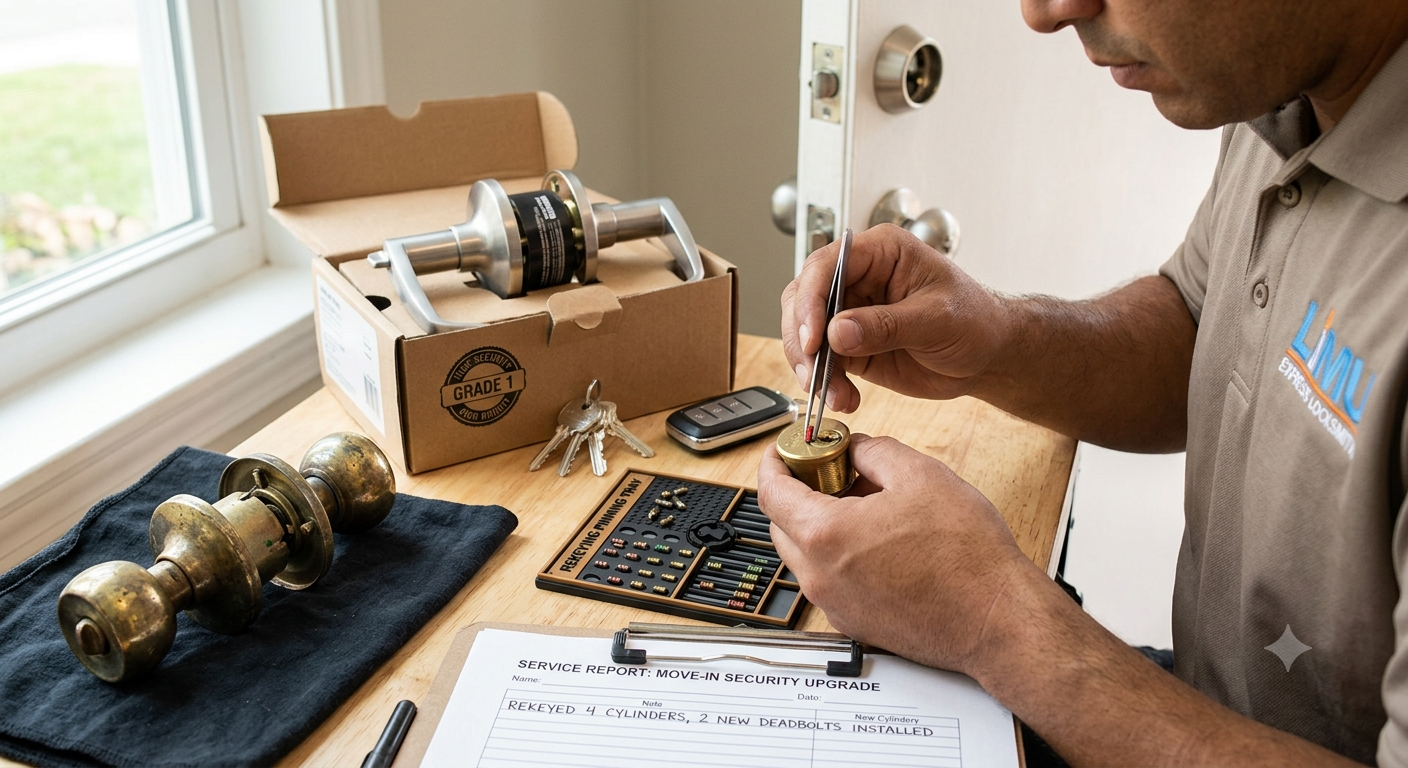
- Rekeying Locks: A technician removes the existing lock cylinder, extracts the old internal bottom and top pins, and replaces them with a new combination of color-coded brass tumbler pins tailored to a brand-new key depth profile. The lock housing, handles, strike plates, and deadbolts remain intact on the door.
- Replacing Locks: The entire locking assembly—including exterior levers/knobs, interior thumbturns, latch mechanisms, deadbolt throws, and strike plates—is removed from the door cutout and replaced with completely new hardware.
When Rekeying Is the Ideal Choice
Rekeying is the most efficient and cost-effective solution in the vast majority of property turnover scenarios:
- Moving Into a Newly Purchased Home: You rarely know how many duplicate keys were given to contractors, real estate agents, neighbors, or previous tenants. Rekeying invalidates every existing key in circulation instantly.
- Key Standardization (One-Key Home System): If your front door, back door, garage entry, and patio deadbolt currently require four different keys, a locksmith can rekey all cylinders to operate off a single key—provided the locks share the same keyway profile (e.g., all Schlage C keyways or all Kwikset KW1 keyways).
- Tenant Turnover in Residential or Commercial Rentals: Property managers can quickly rekey units between lease terms to ensure former tenants cannot regain access, maintaining strict liability protection.
When Complete Lock Replacement Is Mandatory
Despite the cost efficiency of rekeying, replacing the entire hardware setup is necessary under specific mechanical and structural conditions:
| Scenario | Primary Reason to Replace Hardware |
| Severe Mechanical Wear or Fatigue | Internal springs, cam actuators, or pin chambers are worn out, causing keys to stick or bind. |
| Upgrading Security Grades | Upgrading from builder-grade residential (ANSI Grade 3) to heavy-duty commercial (ANSI Grade 1 or 2). |
| Physical Force or Burglary Damage | The latch bolt, strike plate, or internal housing has been bent or cracked from a pry-bar attack. |
| Aesthetic / Architectural Upgrades | Updating old, tarnished, or mismatched door handles to modern finishes (e.g., matte black or satin nickel). |
| Transitioning to Smart / Electronic Access | Replacing traditional mechanical keyways with digital keypads, Bluetooth smart locks, or RFID readers. |
Keyway Compatibility and Master Key Integration
During a rekeying service, a professional locksmith in Orlando FL verifies the keyway brand profile (such as Kwikset, Schlage, Yale, or Corbin Russwin). If existing doors feature mismatched keyways that cannot physically accept the same key blank, the locksmith can swap out individual key cylinders without replacing the expensive decorative exterior handle sets.
Furthermore, rekeying allows for the creation of customized master key hierarchies—giving property owners a master key that opens all doors while providing tenants or service workers with keys restricted to single entry points.